Using Your VA Loan Again: What Changes When You Sell or Keep the Home
Selling, paying off and keeping a VA-financed home lead to different entitlement questions. An updated COE and lender review establish the next purchase options.
By Brandon Salem · 3 min read
Why this matters: Whether you sell, pay off or keep a VA-financed home changes how much entitlement you can use next. An updated Certificate of Eligibility and a lender review show your real options before you shop.
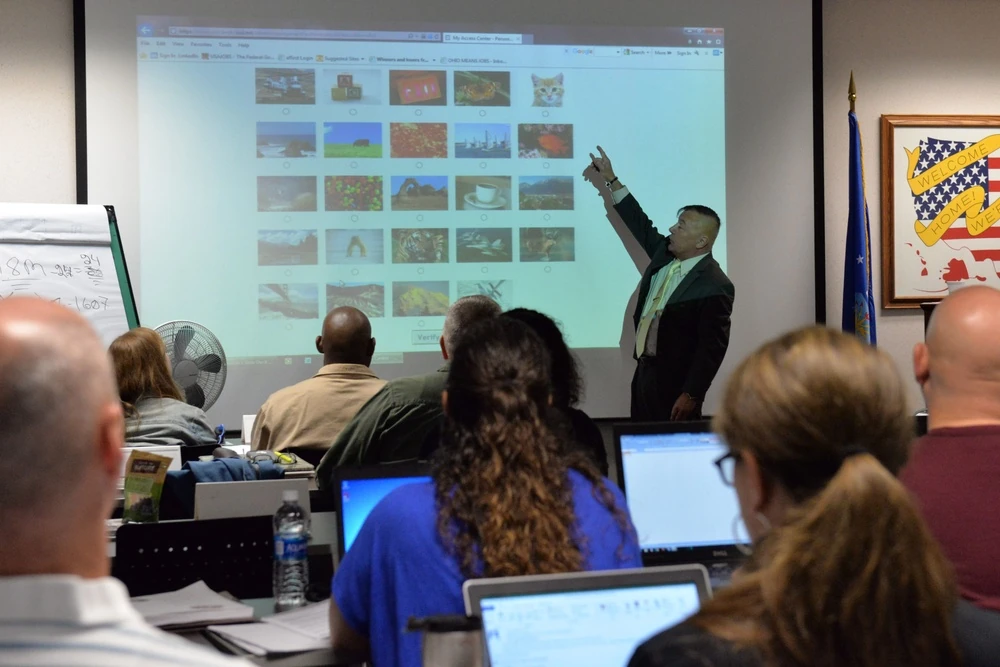
Cover: Archival image from October 2016. VA benefits adviser Anthony Weeks briefs transitioning service members at Wright-Patterson Air Force Base, Ohio; the program covers benefits including the VA Home Loan Guaranty. U.S. Air Force photo by Michelle Gigante, via DVIDS, public domain. Not a current event; the appearance of Department of War visual information does not imply or constitute endorsement, and the people pictured are not borrowers discussed here.
A VA-backed mortgage is a benefit borrowers may be able to use again, even when a previous VA loan remains open. In a September 15 reminder, the Department of Veterans Affairs said repeat use depends on available entitlement, occupancy and lender requirements. For homeowners planning a move, the first question is what happens to the existing home and its loan.
Eligibility and loan approval answer different questions
A Certificate of Eligibility, or COE, documents access to the VA benefit based on service history and duty status. It does not approve a purchase price or a monthly payment. VA says borrowers must also satisfy credit, income and occupancy requirements. A lender still evaluates the application, and the new home must be one the borrower will live in.
Selling and repaying can free up used entitlement
VA lists selling the home and paying the prior loan in full as one route to restoration of entitlement. A sale alone is not the whole test. If a buyer assumes the existing VA mortgage, restoration through that route requires a qualified veteran buyer who substitutes sufficient entitlement for the seller's entitlement.
Video explainer: VA Housing Education, published November 25, 2025 (6:09), covers full versus partial entitlement and buying again while a VA loan is open. It is a private education channel, not the Department of Veterans Affairs, and its 2026 county-limit figures should be confirmed with your lender.
That distinction matters when comparing offers involving an assumption. Ask the lender to identify whether the transaction includes an approved substitution, and what the seller's updated COE will show afterward.
Keeping the home creates two different paths
A borrower who repays the previous VA loan in full but keeps the property may request a one-time restoration. VA specifically limits that paid-off-but-retained-property option to one use. Keeping a home with an active VA mortgage is different: the entitlement supporting that loan remains committed, although unused entitlement may support another purchase.
VA's September reminder confirms that some borrowers can have two VA-backed loans simultaneously. That possibility depends on the available benefit and the new application; it is not permission to use a purchase loan for a vacation home or an investment property.
Remaining entitlement can affect the down payment
Under VA's entitlement calculation, a borrower without full entitlement starts with 25% of the new property's county one-unit conforming loan limit, then subtracts entitlement already used. Lenders use the remainder to assess how much financing the VA guaranty can support.
A down payment may be necessary when remaining entitlement does not support the requested loan. Full entitlement removes the VA loan-limit constraint, but it does not remove underwriting or appraisal requirements. Existing mortgage payments and other debts still matter when the lender reviews affordability.
Check the record before planning the next closing
Request a COE with entitlement restoration online, ask a lender to submit the request, or use VA Form 26-1880. VA's eligibility FAQ identifies payoff evidence, such as a paid-in-full lender statement or settlement documentation, as useful for restoration requests.
Before committing to the next purchase, ask the lender to confirm the entitlement available, any required down payment, occupancy plans and the effect of carrying both homes. Restoring a benefit is one part of preparing to borrow again.