A Sunday Mortgage Quote Is Not a Rate Lock: Check the Deadline and the Fine Print
Before relying on a weekend rate quote, confirm whether your loan is locked, when that protection expires, and the separate rules for extensions and float-downs.
By Christopher Salem · 3 min read
Why this matters: A rate you see on a weekend is a planning number. Only a confirmed lock, with a written expiration, protects a rate for your loan, and extensions or float-downs follow their own rules.
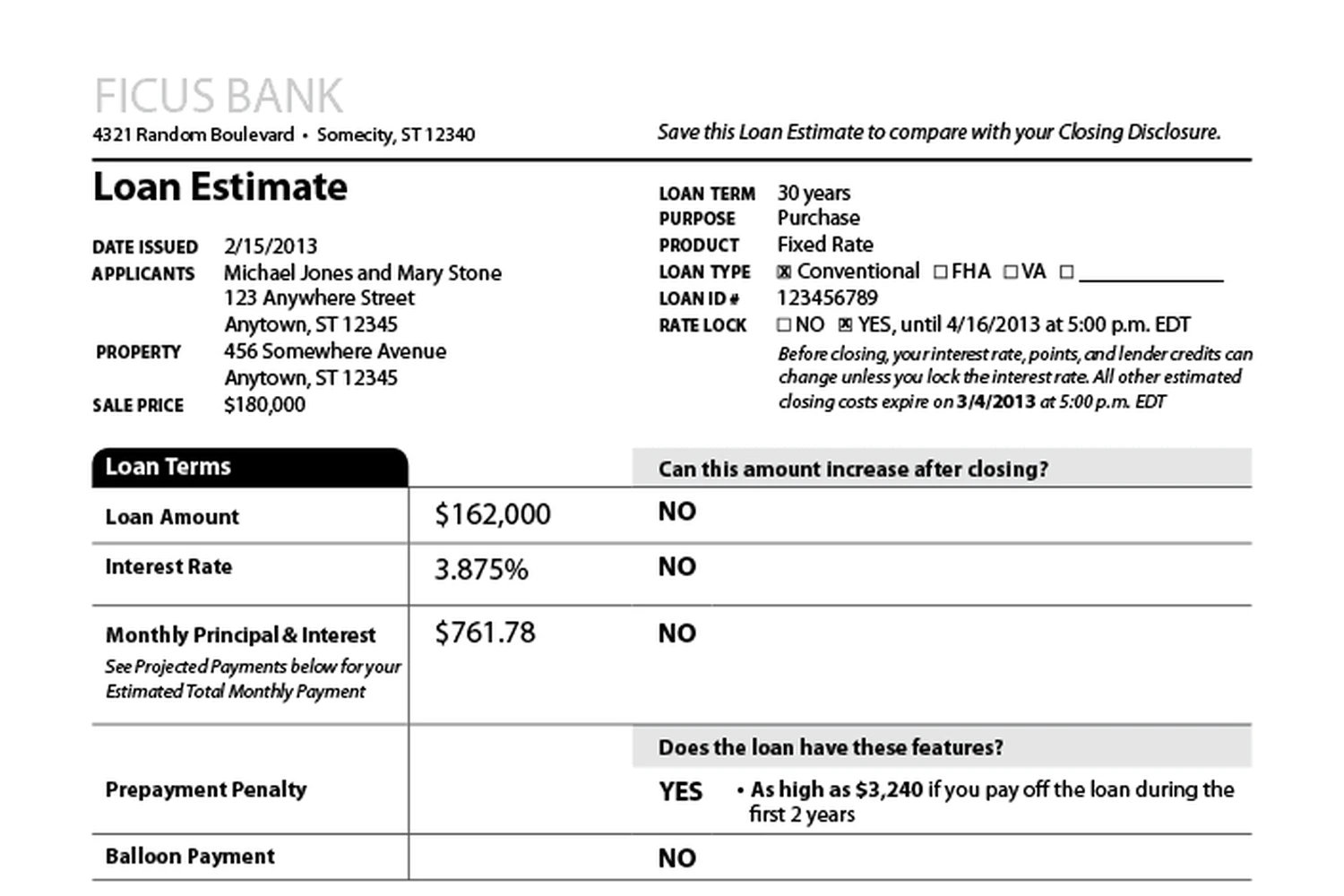
Cover: CFPB sample Loan Estimate, dated 2013, showing the Rate Lock field. The example figures are not current rates or a loan offer. Source: Consumer Financial Protection Bureau, public-domain government content.
A mortgage rate on a website this Sunday can help you plan a payment. By itself, it does not establish that a lender has locked that rate for your loan. The useful question is whether you have a confirmed lock, what it covers, and when it ends.
On Sunday, October 4, a useful task is to line up the lock deadline with your closing calendar. Ask your lender whether a weekend request takes effect immediately or must wait for its lock desk, and save the confirmation.
Find the lock status before relying on the number
The Consumer Financial Protection Bureau explains that a lock protects an agreed rate during a specified period, provided the loan closes within that window and the application does not change. A quote and a lock are therefore different steps.
Look at the top of page one of your Loan Estimate for the lock status and expiration. Then ask the lender to confirm the interest rate, points or lender credits, loan program, and exact expiration date, time, and time zone. Do not confuse the rate-lock deadline with the separate date through which other estimated closing costs are available.
A locked rate is also not final loan approval. The CFPB's Loan Estimate guidance makes that distinction explicit. Income documentation, credit, the appraisal, and other loan conditions still matter.
Ask about extensions before the closing date slips
Put the lock expiration beside your scheduled closing date. If the dates leave little room for an unresolved appraisal, title issue, or document request, contact the loan officer while there is still time to act.
Ask how many additional days are available, what each extension costs in dollars, when a request must arrive, and who pays under the lender's policy if the delay comes from its processing. Ask what pricing applies if the lock expires without an extension. Do not assume an extension is automatic or free.
The CFPB warns that borrowers may face an extension fee even when lender processing causes the delay. It recommends discussing a longer lock and the lender's extension policy. The original Loan Estimate alone does not answer every lock-cost question.
A float-down has its own conditions
A float-down can allow a lower rate after locking when the lender offers that feature. It is not a promise that every later advertised rate will replace yours. Ask whether your specific loan qualifies, whether you must request it, how much pricing must improve, what it costs, and how close to closing it can be used.
Older explainer: Your Loan Educator (Texas Lone Star Lending), published August 5, 2026 (1:15), on why an agreed rate does not automatically fall after locking. General education from a lender, not October 4 pricing.
Also ask whether it changes the expiration date. For example, a lender disclosure revised July 13, 2026 describes several options that retain the original lock expiration after a rate reduction. That is a lender-specific example, not an industrywide rule. A lower rate and more time are separate questions.
Keep one written record
Save the lock confirmation, any extension approval, and the float-down terms with your loan documents. If the rate later changes, ask for the specific reason and a revised explanation of your costs. A few written answers now can make a moving closing date much easier to manage.