Rental Vacancy Rose to 7.6% in Q3 2026 While Homeownership at 65.5% Was Not Statistically Different
Census reports a 7.6% rental vacancy rate for the third quarter of 2026, higher than 7.1% a year earlier and 7.3% in the second quarter. Homeowner vacancy was 1.2%, and the 65.5% homeownership rate was not statistically different from either comparison.
By Brandon Salem · 4 min read
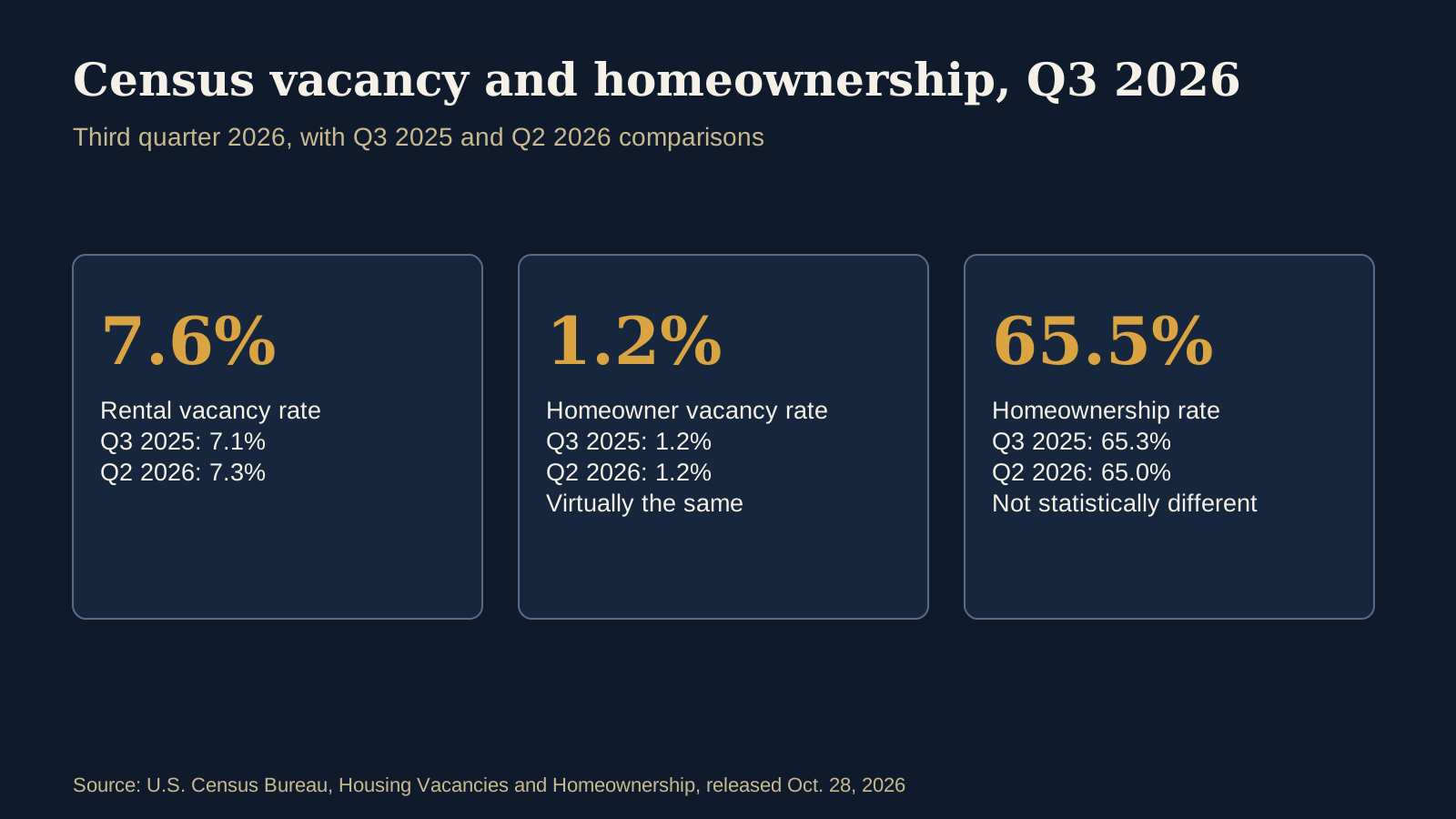
The national rental vacancy rate was 7.6% in the third quarter of 2026, higher than 7.1% a year earlier and 7.3% in the second quarter, the U.S. Census Bureau reported on Wednesday, Oct. 28, 2026. The homeownership rate was 65.5%, which Census said was not statistically different from either the third quarter of 2025 or the second quarter of 2026, according to its Quarterly Residential Vacancies and Homeownership release.
The report covers July through September 2026 and is based on the Current Population Survey/Housing Vacancy Survey, a sample survey. That matters for reading the numbers: Census describes changes using statistical tests, and a move that looks like a change on paper may not be one the survey can distinguish from sampling error.
The three headline rates
| Measure | Q3 2025 | Q2 2026 | Q3 2026 |
|---|---|---|---|
| Rental vacancy rate | 7.1% | 7.3% | 7.6% |
| Homeowner vacancy rate | 1.2% | 1.2% | 1.2% |
| Homeownership rate | 65.3% | 65.0% | 65.5% |
Source: U.S. Census Bureau, Quarterly Residential Vacancies and Homeownership, Third Quarter 2026, released Oct. 28, 2026 (CB26-161). Census describes the rental rate as higher than both earlier periods, the homeowner vacancy rate as virtually the same, and the homeownership rate as not statistically different from either.
How to read the rental increase
A higher rental vacancy rate means a larger share of the rental stock was vacant and available for rent during the quarter. Census said the third-quarter rate was higher than both comparison periods. The release itself does not explain why, and it does not measure rents, so it should not be read as proof that rents are falling in any particular market.
For renters weighing a purchase, a softer national rental market can mean more options when a lease comes up for renewal. Local conditions vary widely, and Census publishes separate state and metropolitan area tables for those comparisons.
Homeownership did not clearly move
The 65.5% homeownership rate is higher on paper than 65.3% a year earlier and 65.0% last quarter, but Census said neither difference was statistically significant. The accurate reading is that the survey does not show a measurable change in the share of households that own their homes. The homeowner vacancy rate, at 1.2%, was virtually the same as in both comparison quarters.
What this means for buyers
- Use national rates as background. Local listings, rents and price trends are a better guide to a specific decision.
- Treat a gap between two survey numbers as a change only when Census says it is statistically significant.
- If renting while you save, ask landlords about renewal terms. A higher national vacancy rate does not guarantee concessions locally.
Cover: native data graphic by mortgage.news from the Census Bureau's published rates.